
Family violence family law South Australia questions often arise when separation, parenting arrangements, intervention orders, mediation or court deadlines become urgent. If there is immediate danger, call 000. For 24/7 support, 1800RESPECT can be contacted on 1800 737 732, and South Australia’s Domestic Violence Crisis Line can be contacted on 1800 800 098.
This article explains how family violence can affect family law decisions in South Australia, including parenting arrangements, Family Dispute Resolution, intervention orders, evidence, property settlement and urgent court steps. It is general information only and is not a substitute for legal advice about your particular circumstances.
Family violence matters are highly fact-specific. The safest next step may depend on the immediate risk, whether children are involved, whether an intervention order exists, whether the other person knows your location, and whether court orders are already in place.
Key takeaways
- If you or a child is in immediate danger, call 000 before trying to solve the legal issues.
- Family violence can affect parenting arrangements, handovers, communication, mediation suitability and urgent court applications.
- An intervention order in South Australia can protect a person from abuse, but it should be considered alongside any existing or proposed family law orders.
- Mediation may not be suitable where there is family violence, coercive control, intimidation or a serious power imbalance.
- Early legal advice can help you organise safety concerns, evidence, parenting proposals and the correct court pathway.
What counts as family violence in family law?
Family violence is broader than physical assault. It can include behaviour that controls, coerces, threatens, intimidates or causes a family member to fear for their safety or wellbeing. In family law matters, concerns may include physical violence, threats, stalking, property damage, harassment, technology abuse, financial control, isolation from support, intimidation around children, or exposing children to family violence.
The 1800RESPECT domestic and family violence resource explains that domestic and family violence can happen in many types of relationships and does not have to involve physical violence. The practical question in family law is often how the behaviour affects safety, parenting, decision-making, communication and the children’s wellbeing.
If the issue involves children, the court will usually need enough information to understand the risk, the proposed protective steps, and what arrangements may be safe and workable.
First priority: safety before paperwork
Legal documents matter, but immediate safety comes first. If you are unsafe now, contact police or emergency services. If you need crisis support, safe accommodation, counselling or referral in South Australia, the Domestic Violence Crisis Line can help with safety planning, crisis counselling and referrals. 1800RESPECT also provides national counselling, information and support.

When preparing to speak with a lawyer or support service, consider whether it is safe to use your usual phone, email account, device, bank account or shared cloud storage. Technology safety can be important if the other person has access to passwords, location tracking, message history or financial information.
Information that may help a safety conversation
- whether you or the children are safe today
- where the children are and whether school or childcare needs to know anything
- whether police have been contacted
- whether an intervention order exists or has been discussed
- whether there are upcoming handovers, mediation dates or court dates
- whether the other person has access to your devices, home, car, money or documents
- whether there are urgent parenting, housing, financial or property issues
How family violence can affect parenting arrangements
Parenting decisions in Australia focus on the best interests of the child. The Federal Circuit and Family Court of Australia explains how the Court considers safety and risk, including the Notice of Child Abuse, Family Violence or Risk that is required in parenting proceedings.
Where family violence is alleged or there is a risk of harm, parenting arrangements may need to deal carefully with where children live, who they spend time with, how communication occurs, how handovers happen, whether supervision is needed, and whether orders should limit direct contact between adults.
Awkar & Co’s guide to how parenting arrangements are decided explains the broader parenting framework. Where violence or risk is involved, that framework needs to be applied with safety at the centre.
Intervention orders in South Australia and family law
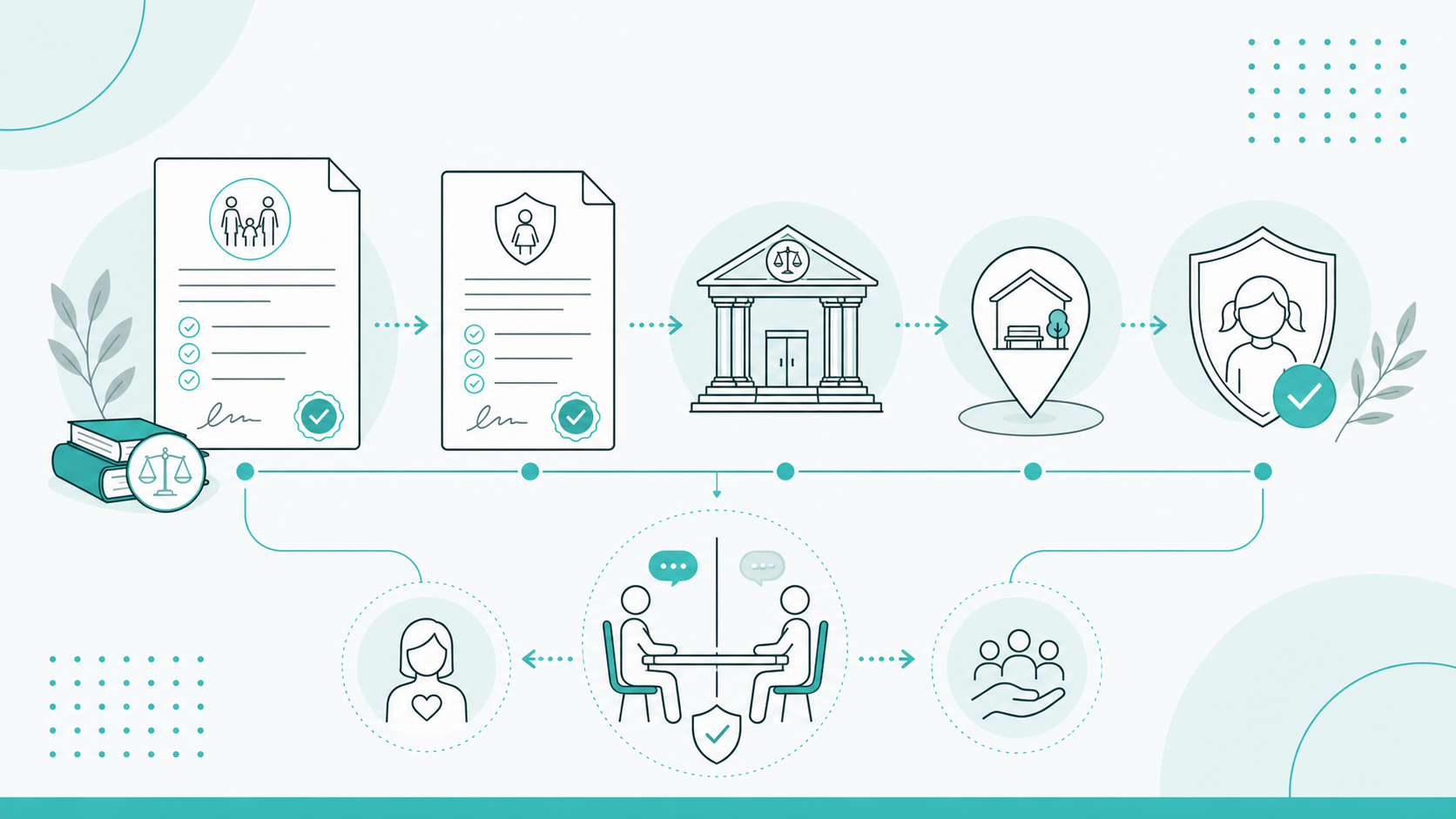
In South Australia, an intervention order may be made to protect a person from abuse. The SA.GOV.AU intervention orders page explains that an interim intervention order can be made by police or the court. The Courts Administration Authority intervention orders page also explains the South Australian process.
An intervention order may include conditions about contact, attending a home, approaching a workplace, communication, weapons, or other conduct. In some situations, children may be named as protected persons. The exact conditions matter. Do not assume that a general family law arrangement overrides the wording of an intervention order, or that an intervention order automatically resolves parenting arrangements.
If you have an intervention order and family law orders, or you are seeking both, legal advice is important. The two systems can interact in complex ways, especially around handovers, communication, school events, changeovers and urgent parenting applications.
When urgent family law advice may be needed
Not every family violence concern requires an immediate family court application, but some situations do need urgent advice. You should seek urgent legal advice if there is an immediate risk to a child, threats to remove a child, refusal to return a child, serious breaches of existing orders, intimidation before mediation, unsafe handovers, family violence affecting housing or money, or a court deadline.
- a child has not been returned after agreed time
- there are threats to take a child interstate or overseas
- there is a current or proposed intervention order involving children
- the other parent is demanding unsafe handovers or direct contact
- mediation has been requested but you are concerned it is not safe
- there are family law orders that no longer feel safe or workable
- you have been served with court documents and need to respond quickly
For parenting emergencies, the legal options may include urgent parenting orders, recovery-related steps, supervised time arrangements, communication restrictions or other protective orders. The correct pathway depends on the facts.
Family violence and mediation
Mediation and Family Dispute Resolution can be useful in some family law disputes, but they are not always suitable. Where family violence, coercive control, intimidation, trauma, significant power imbalance or safety concerns are present, a provider may decide that mediation should not proceed, or should proceed only with safeguards.
Possible safeguards may include shuttle mediation, separate rooms, online attendance, support persons, careful intake screening, lawyer-assisted participation or not proceeding with mediation at all. Awkar & Co’s mediation service page explains the role of mediation, but safety and suitability should be considered before attending or signing anything.
If you are asked to attend FDR before court and you believe it is unsafe, you should get legal advice before ignoring the request or attending without safeguards. In parenting matters, exemptions may apply in some circumstances, but they usually need to be handled carefully.
Evidence and documents to keep
Evidence in family violence matters should be handled carefully. Do not put yourself at risk trying to collect documents. If it is safe to do so, useful material may include police event numbers, intervention order documents, medical records, school or childcare communications, threatening messages, call logs, photographs of damage, financial records, counselling referrals, and notes about dates and incidents.
The goal is not to overwhelm the court or the other party with every detail. The goal is to organise relevant information so your lawyer can understand the pattern of risk, the immediate concerns, and the protective orders or arrangements that may be needed.
Family violence, property settlement and financial control
Family violence can also affect property and financial issues after separation. Financial abuse may involve preventing a person from working, controlling bank accounts, hiding money, refusing access to documents, creating debts, threatening financial consequences, or using property settlement negotiations to maintain control.
If property, debts, superannuation or business interests are involved, read Awkar & Co’s guide to property settlement after separation in South Australia. Where financial control is present, it may also be important to gather safe access to bank records, tax documents, superannuation information and loan documents.
Do not sign a property settlement, parenting plan, consent order or private agreement because of pressure, threats or fear. Get advice first if you are unsure.
How intervention orders and parenting orders can interact
| Issue | Why it matters |
|---|---|
| Contact between adults | An intervention order may restrict phone, text, email or in-person contact, which can affect parenting communication. |
| Child handovers | Orders may need a safe changeover location, third-party assistance, school handover or supervised arrangement. |
| Children as protected persons | If children are protected by an intervention order, parenting arrangements need careful legal review. |
| Existing family law orders | Existing parenting orders may not fit the safety situation after new violence or threats. |
| Mediation or FDR | A provider may need to screen for family violence and decide whether FDR is suitable or whether safeguards are needed. |
If there appears to be a conflict between an intervention order and parenting arrangements, do not guess. Get advice about the wording of each order and the safest lawful next step.
Local South Australian support options
Support options in South Australia may include police, the Domestic Violence Crisis Line, 1800RESPECT, the Legal Services Commission of South Australia, community legal centres, specialist family violence services and private family lawyers. The Women’s Domestic Violence Court Assistance Service provides information and support in relation to intervention orders and related legal issues.
The right pathway depends on whether the issue is immediate safety, accommodation, counselling, an intervention order, parenting arrangements, property settlement, financial abuse, court documents or legal representation. Many people need more than one type of support at the same time.
How Awkar & Co can help
Awkar & Co can help you understand how family violence may affect parenting arrangements, mediation, separation, property settlement and court strategy. The firm can help you organise the issues, prepare for negotiation or court, review documents, and consider what arrangements may be safe and legally appropriate.
If you are dealing with family violence, parenting concerns or urgent family law issues in Adelaide or South Australia, contact Awkar & Co to discuss the next step. If there is immediate danger, contact emergency services first.
Frequently Asked Questions
For clients in Norwood, Kensington, Beulah Park, Rose Park, Dulwich and Toorak Gardens, Awkar & Co can provide careful family violence advice that considers safety, parenting arrangements and urgent next steps.
If you are in immediate danger, call 000. If you need crisis support, South Australia’s Domestic Violence Crisis Line and 1800RESPECT can provide counselling, information and referrals. Once immediate safety is addressed, legal advice can help you understand intervention orders, parenting arrangements, court documents and the safest next step.
Yes. Family violence can be relevant to parenting arrangements because the court must consider safety and risk when deciding what is in a child’s best interests. It may affect where children live, how much time they spend with each parent, handovers, communication, supervision and whether urgent orders are needed.
Not always. Mediation or Family Dispute Resolution may be unsuitable where there is family violence, coercive control, intimidation or serious power imbalance. In some cases safeguards may be used. In parenting matters, exemptions from FDR may apply in some circumstances, but you should get legal advice before deciding what to do.
An intervention order is an order that may protect a person from abuse. It can include conditions about contact, attending certain places, communication or other conduct. Interim intervention orders may be made by police or the court. If an order affects parenting arrangements, get legal advice about how it interacts with family law orders.
Children may be included as protected persons in some intervention orders, depending on the circumstances. This can have important consequences for parenting time, handovers and communication. If children are named in an intervention order, legal advice is important before making or changing parenting arrangements.
Useful evidence may include police event numbers, intervention order documents, messages, emails, call logs, medical records, school communications, photographs, financial records and notes about incidents. Do not risk your safety to collect evidence. A lawyer can help identify what is relevant and how to present it properly.
It can. Family violence, including financial abuse or economic control, may be relevant to property settlement strategy and evidence. It may affect access to documents, negotiations, disclosure and whether a proposed agreement is safe or fair to sign. Get legal advice before agreeing to property terms under pressure.
You should seek advice promptly if there are safety concerns, children are involved, an intervention order exists or is being sought, mediation has been requested, court documents have been served, or parenting arrangements are unsafe. Early advice can help you understand urgent options and avoid steps that may increase risk.
Official resources
For further public information, see 1800RESPECT on domestic and family violence, Victims of Crime South Australia domestic and family violence support, FCFCOA on safety and risk, FCFCOA Family Violence Best Practice Principles, SA.GOV.AU intervention orders and Courts SA intervention orders.