
When parents separate, one of the most important issues they must address is how their children will be cared for moving forward. Decisions about where children live, how much time they spend with each parent, and how major decisions about their upbringing are made are known as parenting arrangements or a parental plan.
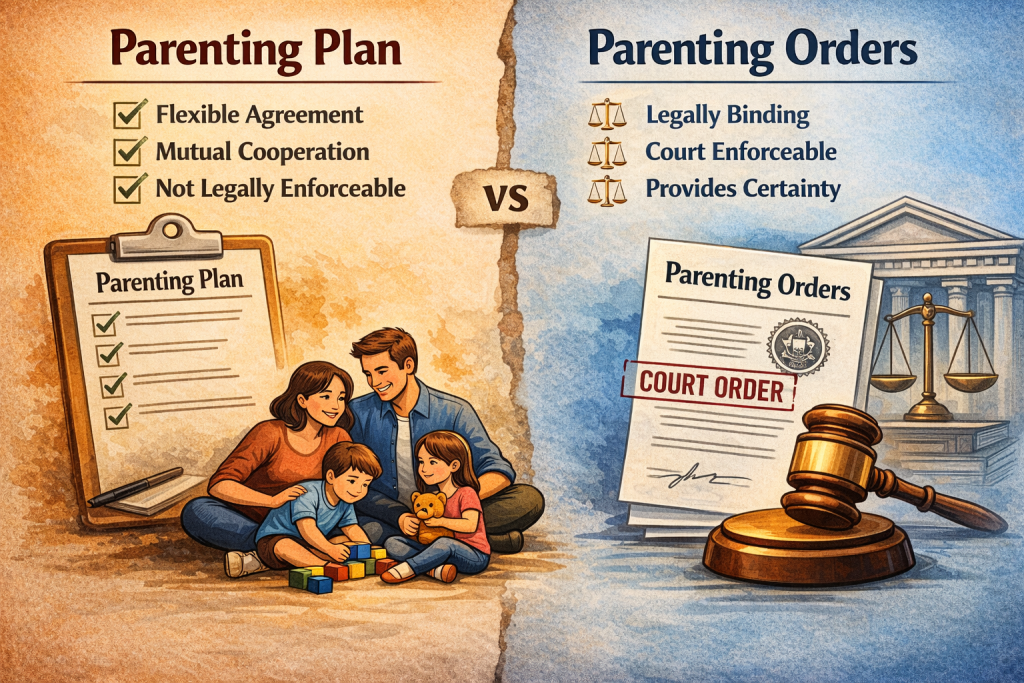
In Australia, these arrangements are typically documented either through a Parenting Plan or Parenting Orders.
Although the two terms sound similar, they operate very differently in family law. One is a flexible written agreement between parents, while the other is a legally enforceable order made by the Court.
Understanding the difference is important for parents navigating separation. Choosing the appropriate structure can affect how parenting arrangements operate in practice, how disputes are resolved, and whether Court enforcement is available if one parent fails to follow the agreement.
At Awkar & Co, parenting matters often arise alongside separation, divorce and financial disputes. Over more than two decades practising family law, Linda Awkar has worked extensively with families navigating parenting arrangements, including matters involving complex parenting disputes and Court proceedings where the best interests of children must be carefully assessed.
This guide explains the difference between Parental Plans and Parenting Orders in Australia, when each option may be appropriate, and how parents can determine which approach best supports their children’s stability and wellbeing.
Quick Answer: Parenting Plan vs Parenting Order
Short answer:
A Parenting Plan is a written agreement between parents about how they will care for their children after separation. It is flexible but not legally enforceable.
A Parenting Order is a legally binding order made by the Family Court or Federal Circuit and Family Court of Australia. It is enforceable by law and can impose obligations on both parents.
Both arrangements focus on the same goal: supporting the child’s best interests after separation.
Why Parenting Arrangements Matter After Separation
When parents separate, children benefit most from stability, clarity and reduced conflict between parents. Parenting arrangements help establish clear expectations about:
• where children live
• how much time they spend with each parent
• how decisions about schooling, health and upbringing are made
• communication between parents
• holiday arrangements
Without clear arrangements in place, disagreements can easily escalate and create uncertainty for children. A good example of this is when one parent decides to move to another state taking the children.
Australian family law places strong emphasis on encouraging parents to resolve parenting arrangements cooperatively where possible, before resorting to Court proceedings.
What Is a Parenting Plan?
A Parenting Plan is a written agreement between parents that outlines how they will care for their children after separation.
Parenting Plans are typically created when parents are able to communicate and reach agreement without requiring Court intervention.
The agreement must:
• be in writing
• be dated
• be signed by both parents
Parenting Plans often include details about:
• living arrangements for the child
• time spent with each parent
• school holiday arrangements
• communication between parents
• how decisions about education or health will be made
Because Parenting Plans are flexible, they allow parents to adapt arrangements as children grow or circumstances change.
Advantages of Parenting Plans
Many families prefer Parenting Plans because they allow parents to manage arrangements cooperatively without the formality of Court orders.
Advantages include:
Flexibility
Parenting Plans can be adjusted by agreement as circumstances change. For example, arrangements may evolve as children grow older or schooling commitments change.
Lower Conflict
Because Parenting Plans are negotiated rather than imposed by a Court, they can help reduce the adversarial nature of parenting disputes.
Lower Cost
A Parenal Plan can often be developed through negotiation or mediation, avoiding the legal costs associated with Court proceedings.
Limitations of A Parental Plan
While Parental Plans can be effective in cooperative situations, they also have important limitations.
Not Legally Enforceable
If one parent does not follow the Parenting Plan, the other parent cannot immediately enforce it through the Court.
Instead, further legal steps may be required to convert the arrangements into formal Parenting Orders.
Reliance on Cooperation
A Parental Plan work best where parents maintain respectful communication and are committed to acting in their children’s best interests.
In high-conflict situations, a Parenting Plan may not provide sufficient certainty.
What Are Parenting Orders?
Parenting Orders are legally binding orders made by the Federal Circuit and Family Court of Australia.
These orders set out parenting arrangements in a way that is legally enforceable.
Parenting Orders may address issues such as:
• where the child lives
• how much time the child spends with each parent
• parental responsibility for major decisions
• communication arrangements
• travel restrictions
• arrangements for school holidays or special occasions
Because they are Court orders, both parents must comply with them.
How Parenting Orders Are Created
Parenting Orders can arise in two main ways.
Consent Orders
If parents reach agreement about parenting arrangements, they can apply to the Court for Consent Orders.
The Court reviews the agreement to ensure it supports the child’s best interests. If approved, the agreement becomes a legally binding Parenting Order.
This allows parents to formalise their agreement without attending a contested Court hearing.
Court-Determined Parenting Orders
If parents cannot reach agreement, the Court may determine parenting arrangements after considering evidence from both parties.
The Court examines various factors, including:
• the child’s safety
• the child’s relationship with each parent
• each parent’s ability to care for the child
• the child’s emotional and developmental needs
• any allegations of family violence
In complex parenting disputes, the Court may also appoint an Independent Children’s Lawyer to assist with the case.
The Best Interests of the Child
When making Parenting Orders, the Court’s primary consideration is the best interests of the child.
Key factors include:
• protecting children from physical or psychological harm
• promoting meaningful relationships with both parents where safe
• ensuring stability in the child’s life
• considering the child’s views where appropriate
The Court’s responsibility is not to determine what arrangement is most convenient for parents, but rather what outcome best supports the child’s wellbeing.
Parenting Plans vs Parenting Orders: Key Differences
Although both arrangements deal with parenting responsibilities, their legal effect is very different.
Parenting Plans
• Written agreement between parents
• Flexible and adaptable
• Not legally enforceable
• Suitable for cooperative parenting situations
Parenting Orders
• Legally binding Court orders
• Enforceable by law
• Provide certainty where conflict exists
• Used in both agreed and contested parenting matters
Choosing the appropriate option often depends on the level of cooperation between parents and the complexity of the situation.
When Should Parents Consider Parenting Orders?
Parenting Orders may be appropriate where:
• parents cannot agree on parenting arrangements
• there are ongoing disputes about time with children
• one parent is not complying with previous agreements
• safety concerns exist
• relocation issues arise
• long-term certainty is needed
In these situations, legally enforceable arrangements can provide clarity and stability for both parents and children.
Can Parental Plans Become Parenting Orders?
Yes.
Parents who initially create a Parental Plan may later decide to formalise their arrangements through the Court by applying for Consent Orders.
This allows cooperative parents to maintain flexibility initially while preserving the option of legal certainty later.
Common Mistakes Parents Make When Creating Parenting Arrangements
Parents navigating separation sometimes make decisions that unintentionally create complications.
Common mistakes include:
Leaving Arrangements Informal
Without clear agreements, misunderstandings about parenting time can escalate quickly.
Focusing on Conflict Rather Than Stability
Children benefit most from stability and reduced parental conflict.
Using Children as Messengers
Communication between parents should occur directly rather than through children.
Ignoring Long-Term Needs
Parenting arrangements should account for schooling, extracurricular activities and future developmental needs.
Seeking structured advice early can help parents avoid these pitfalls.
FAQ’s – Parenting Plans and Parenting Orders
Are Parenting Plans legally binding?
No. Parenting Plans are written agreements but they are not legally enforceable by the Court.
Can Parenting Orders be changed?
Yes. Parenting Orders can be changed if both parents agree or if the Court determines that significant circumstances have changed.
Do parents have to go to Court to obtain Parenting Orders?
Not always. Parents who reach agreement can apply for Consent Orders, allowing the Court to formalise the agreement without contested hearings.
What happens if a parent breaches Parenting Orders?
Because Parenting Orders are legally binding, a parent who breaches them may face legal consequences and enforcement proceedings.
Do Parenting Orders automatically end when a child turns 18?
Yes. Parenting Orders generally remain in effect until the child reaches adulthood unless varied by the Court earlier.
Can parents still cooperate after Parenting Orders are made?
Yes. Parenting Orders provide legal certainty, but many parents continue cooperating and adjusting day-to-day arrangements where appropriate.
Are Parenting Plans better than Parenting Orders?
Neither option is inherently better. The most appropriate approach depends on the level of cooperation between parents and the needs of the child.
Can grandparents be included in Parenting Orders?
In some cases, the Court may make orders allowing children to spend time with grandparents or other significant family members.
Parenting Arrangements and Child Support
Parenting arrangements can also influence child support assessments.
The amount of time children spend with each parent may affect the financial contributions required under Australia’s child support formula.
For this reason, parenting arrangements and child support issues are often closely connected in family law matters.
Resolving Parenting Disputes Through Mediation
Before applying to the Court for Parenting Orders, parents are usually required to attempt Family Dispute Resolution (FDR).
Mediation allows parents to discuss parenting arrangements with the assistance of an independent mediator.
Many parenting disputes are successfully resolved through mediation without requiring Court intervention.
Supporting Children Through Separation
While legal arrangements are important, the emotional wellbeing of children remains the central priority during separation.
Children benefit from:
• consistent routines
• respectful communication between parents
• reassurance that both parents continue to care for them
• stability in schooling and social environments
Parents who prioritise cooperation and stability often help reduce the emotional impact of separation on children.
Understanding Parenting Arrangements in Australian Family Law
Parenting Plans and Parenting Orders both exist to help families establish clear arrangements for children after separation.
For cooperative parents, Parenting Plans may offer the flexibility needed to adapt arrangements over time. In more complex situations, Parenting Orders provide legally enforceable certainty and guidance.
Understanding the difference between these options can help parents make informed decisions about the structure that best supports their children.
With more than two decades practising family law and extensive experience assisting families in parenting matters involving children’s welfare, Awkar & Co works with parents to navigate parenting arrangements, resolve disputes and develop practical solutions focused on the best interests of children.
Related Resources
Property Settlement in Australia
Family Law Advice in South Australia
Awkar & Co helps separated parents in Norwood, Kensington, Marryatville, St Peters, Maylands and Payneham understand whether a parenting plan or parenting order is suitable.