
Estimated reading time: 11 minutes
Consent orders Australia searches usually come from people who have reached, or are close to reaching, a family law agreement and want to know how to make it legally binding. The agreement might be about children, the family home, superannuation, debts, spousal maintenance, or a combination of parenting and property issues.
In Australia, consent orders are court orders made by agreement. They can turn a negotiated outcome into enforceable orders without the parties needing to run a contested court case. But the wording matters. A short informal agreement, text message, parenting plan or handshake deal may not provide the same protection as properly drafted consent orders.
This guide explains what consent orders are, how parenting and property consent orders work, what the Court checks before making orders, and when legal advice can help before you file anything. It is general information only and you should seek advice for your specific circumstances.
Key takeaways
- Consent orders are legally binding court orders made by agreement between the parties.
- They can cover parenting arrangements, property settlement, superannuation splitting, spousal maintenance and some related financial issues.
- Parenting consent orders must be in the child’s best interests.
- Property consent orders usually need enough financial information for the Court to assess whether the proposed settlement is just and equitable.
- Poorly drafted orders can create uncertainty, enforcement problems or future disputes.
- Legal advice before filing can help identify gaps, risks and missing documents.
What are consent orders in family law?
Consent orders are orders made by the Federal Circuit and Family Court of Australia after the parties have reached agreement. Instead of asking the Court to decide the dispute after a contested hearing, the parties ask the Court to approve the agreed terms. Once made, the orders are legally binding.
The Federal Circuit and Family Court of Australia application for consent orders is used for parenting and financial orders. The Court can make consent orders without requiring the parties to attend court in many straightforward matters, although the Court still reviews the proposed orders before approving them.
Consent orders can be useful after negotiation, mediation, Family Dispute Resolution, lawyer-assisted settlement discussions, or private agreement between separated parties. They are often the step that turns a practical agreement into a formal legal outcome.
What can consent orders cover?
Consent orders can cover parenting issues, financial issues or both. The correct terms depend on what the parties have agreed and whether the proposed orders are appropriate.
| Type of consent order | Common issues covered |
|---|---|
| Parenting consent orders | Where children live, time with each parent, school holidays, special occasions, communication, travel, handovers, decision-making and sometimes safety arrangements. |
| Property consent orders | The family home, bank accounts, vehicles, debts, business interests, trusts, inheritances, sale or transfer of property and payment deadlines. |
| Superannuation orders | Splitting superannuation interests, procedural fairness to the super fund and implementation steps. |
| Spousal maintenance orders | Ongoing or lump sum maintenance arrangements where appropriate. |
| Related practical orders | Document signing, refinancing, sale processes, valuations, tax documents, transfer deadlines and default steps. |
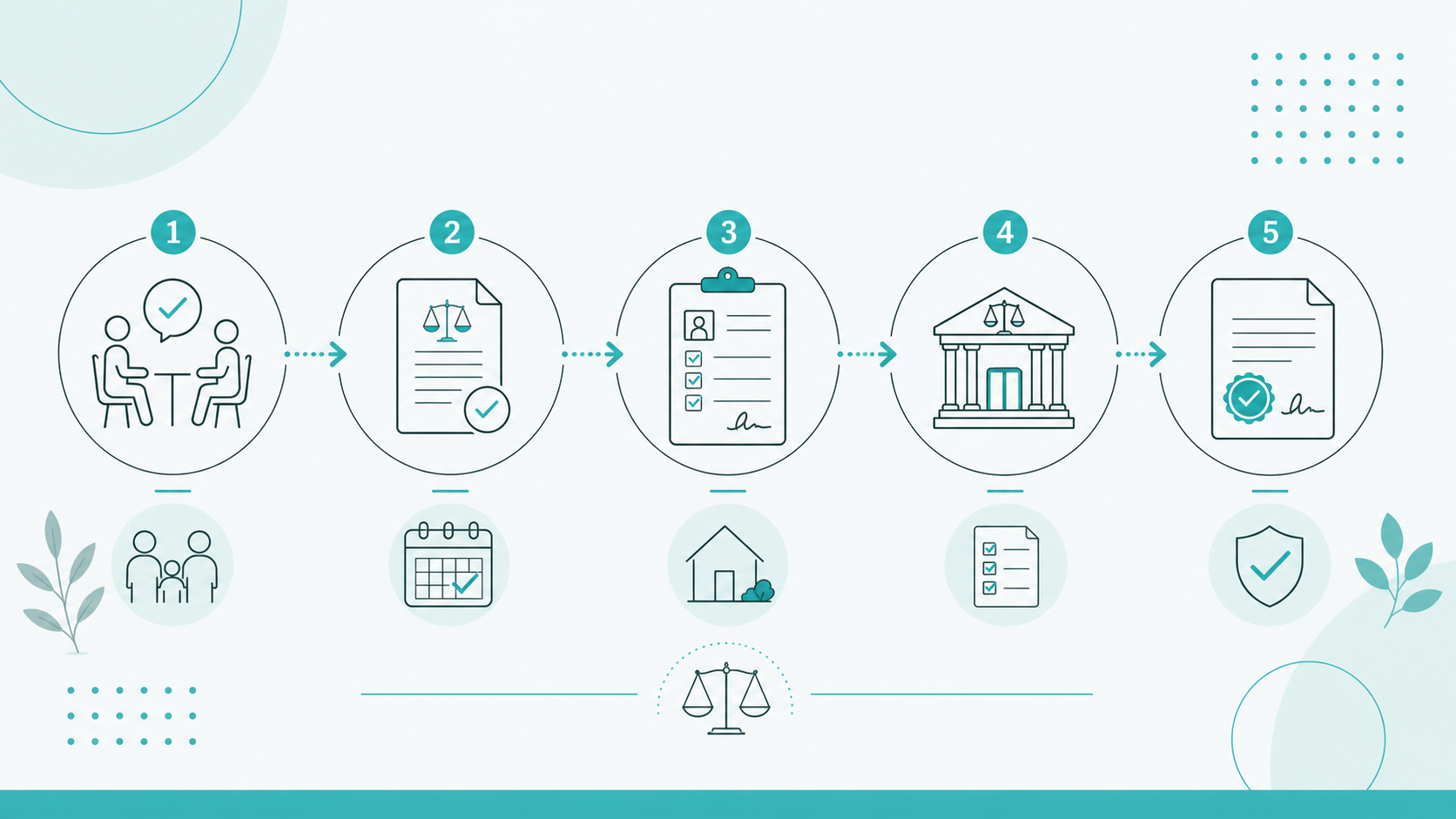
Parenting consent orders
Parenting consent orders are used when parents or carers agree on arrangements for children and want those arrangements made into court orders. They may be appropriate where the parties want a clear, enforceable arrangement rather than a flexible parenting plan.
Parenting consent orders may deal with where a child lives, how much time they spend with each parent, communication, holidays, birthdays, schooling, health decisions, travel, handovers and other practical matters. If there are safety concerns, orders may need extra care around handovers, supervision, communication, risk and intervention orders.
For broader context, Awkar & Co’s guide to parenting plans vs parenting orders explains the difference between informal agreements and court orders. The guide to how parenting arrangements are decided also explains the best interests framework.
Property consent orders
Property consent orders are used to formalise how assets, liabilities, superannuation and financial interests will be divided after separation. They are commonly used to deal with the family home, mortgage refinancing, sale proceeds, cars, savings, debts, businesses, trusts and superannuation.
The Court does not simply stamp every agreement. In financial matters, the Court generally needs enough information to assess the proposed settlement. If the asset pool, values, debts, superannuation or disclosure are unclear, the application may be delayed or the proposed orders may need to be revised.
Awkar & Co’s guide to property settlement after separation in South Australia explains how the broader property settlement process works. If the draft orders involve disclosure, read the draft guide on financial disclosure once it is approved, because incomplete disclosure is one of the common reasons property agreements become risky.
Consent orders vs parenting plans vs private agreements
Not every agreement needs consent orders, but it is important to understand the difference before relying on an informal arrangement.
| Document | Legally binding? | Best used when |
|---|---|---|
| Parenting plan | Generally not enforceable as a court order, although it may be relevant evidence. | Parents want a flexible written parenting arrangement and can cooperate. |
| Consent orders | Yes, once made by the Court. | The parties want enforceable parenting or property terms. |
| Private property agreement | Not necessarily, unless formalised in an appropriate legal document. | The parties are still negotiating or recording heads of agreement before legal drafting. |
| Binding financial agreement | Can be binding if strict legal requirements are met. | The parties want a financial agreement pathway rather than court orders, with independent legal advice. |
The right pathway depends on the issue, the relationship between the parties, the risk of future disagreement, the need for enforceability and the complexity of the property or parenting terms.
What the Court looks at before making consent orders
The Court reviews consent orders before making them. In parenting matters, the proposed orders need to be consistent with the child’s best interests. In property matters, the proposed orders need to be legally appropriate and generally just and equitable. The Court may also consider whether the application provides enough information to support the orders requested.
The FCFCOA application materials include the application and proposed minutes of order. Depending on the orders sought, supporting information may be needed about children, property, liabilities, superannuation, valuations, financial resources and procedural requirements.

Common mistakes in consent orders
Consent orders should be precise enough to be understood and implemented. Vague wording can create problems later, especially where deadlines, documents, handovers, school holidays, refinancing, sale conditions or superannuation splits are involved.
- using vague wording such as ?reasonable time? without enough detail
- forgetting school holiday, birthday, Christmas or travel arrangements
- not dealing with handover location or communication boundaries
- leaving out payment dates, sale dates or refinancing deadlines
- not checking superannuation fund requirements before drafting a split
- not accounting for mortgages, debts, tax, stamp duty or transfer costs
- trying to finalise property orders without enough financial disclosure
- assuming a child support arrangement is automatically covered by parenting or property orders
- signing under pressure or without understanding the legal effect
Do you need a lawyer for consent orders?
You can apply for consent orders without a lawyer, but legal advice is often valuable. A family law lawyer can help you check whether the proposed terms are clear, practical, enforceable and consistent with the broader family law position. This is especially important where children are young, communication is difficult, family violence has occurred, property is complex, superannuation is involved, or one person is taking over the mortgage.
Legal advice can also help identify whether consent orders are the best pathway, or whether a parenting plan, binding financial agreement, child support agreement or court application may be more appropriate.
Consent orders after mediation
Many people reach agreement at mediation or Family Dispute Resolution and assume the matter is finished. Sometimes that is true in a practical sense, but it may not be legally complete. A mediation agreement may need to be converted into consent orders, a parenting plan or another legally appropriate document.
Awkar & Co’s mediation guide explains how Family Dispute Resolution works before court. If agreement is reached during mediation, advice before signing or filing can help ensure the wording reflects what was actually agreed and does not create unexpected consequences.
Consent orders and child support
Child support is its own area. Some child-related expenses may be discussed alongside parenting or property arrangements, but private child support arrangements may need a limited or binding child support agreement, or may need to sit alongside a Services Australia assessment.
Awkar & Co’s child support agreements draft explains the difference between limited and binding child support agreements. Until that draft is approved, the main child support guide explains how child support payments are calculated in Australia.
Consent orders in South Australia
Family law is federal, so consent orders are made under the Australian family law system rather than a separate South Australian family court system. However, South Australian context still matters. Adelaide families may need to account for local school calendars, changeover locations, interstate travel, SA property transfer steps, local real estate agents, accountants, mortgage brokers and superannuation fund requirements.
If your matter also involves separation, read Awkar & Co’s guide to what to do first after separation in South Australia. That article can help you identify which issues should be resolved before finalising orders.
How Awkar & Co can help
Awkar & Co can help you review proposed consent orders, identify gaps, draft clear terms, prepare for mediation, organise property disclosure and understand whether an agreement is ready to file. The firm can assist with parenting consent orders, property settlement consent orders and related issues such as superannuation, child support and family violence concerns.
If you have reached agreement, or you are close to agreement, contact Awkar & Co before filing or signing documents. Getting advice early can help avoid unclear, impractical or incomplete orders.
Frequently Asked Questions
Consent orders are court orders made by agreement between the parties. They can cover parenting, property, financial and related family law issues. Once made by the Court, they are legally binding and enforceable.
Yes. Consent orders can deal with parenting issues, property settlement, superannuation, spousal maintenance and related practical steps. Whether it is sensible to include everything in one application depends on the circumstances and the information available.
They serve different purposes. A parenting plan is usually more flexible but is not enforceable like a court order. Consent orders are legally binding once made by the Court. The better option depends on cooperation, risk, the need for certainty and whether enforcement may be needed.
Usually, proper financial disclosure is important before agreeing to property consent orders. Without enough information about assets, debts, superannuation and financial resources, a person may agree to terms without understanding whether the settlement is fair or workable.
In many cases, an application for consent orders can be considered by the Court on the papers, meaning the parties may not need to attend a hearing. The Court still reviews the proposed orders before deciding whether to make them.
Yes, consent orders can include superannuation splitting where the legal and procedural requirements are met. Superannuation orders often require careful drafting and procedural fairness to the relevant superannuation fund before filing.
Poorly drafted consent orders can create confusion, delay, enforcement problems or future disputes. Common issues include vague handover terms, missing sale or payment deadlines, unclear holiday arrangements and incomplete property transfer steps.
It is sensible to get legal advice before signing or filing consent orders, especially where children, property, superannuation, debts, family violence or future enforcement issues are involved. Legal advice can help identify risks before the orders become binding.
Official resources
For public information and forms, see the FCFCOA Application for Consent Orders, FCFCOA family law forms, FCFCOA parenting orders information, and Family Relationships Online children and family law information.